Hazard identification in mining often happens on the radio: mid-shift, out loud, in a few words. In a 5-day analysis of radio traffic from one underground operation, March 1 to 5, crews called out 37 safety hazards over the air.
We spend a lot of effort teaching crews to spot hazards and speak up. The radio is where they do it. What happens to the call after that is a different story, and that is where the quiet gap sits.
37 hazards in 5 days, all of them said out loud
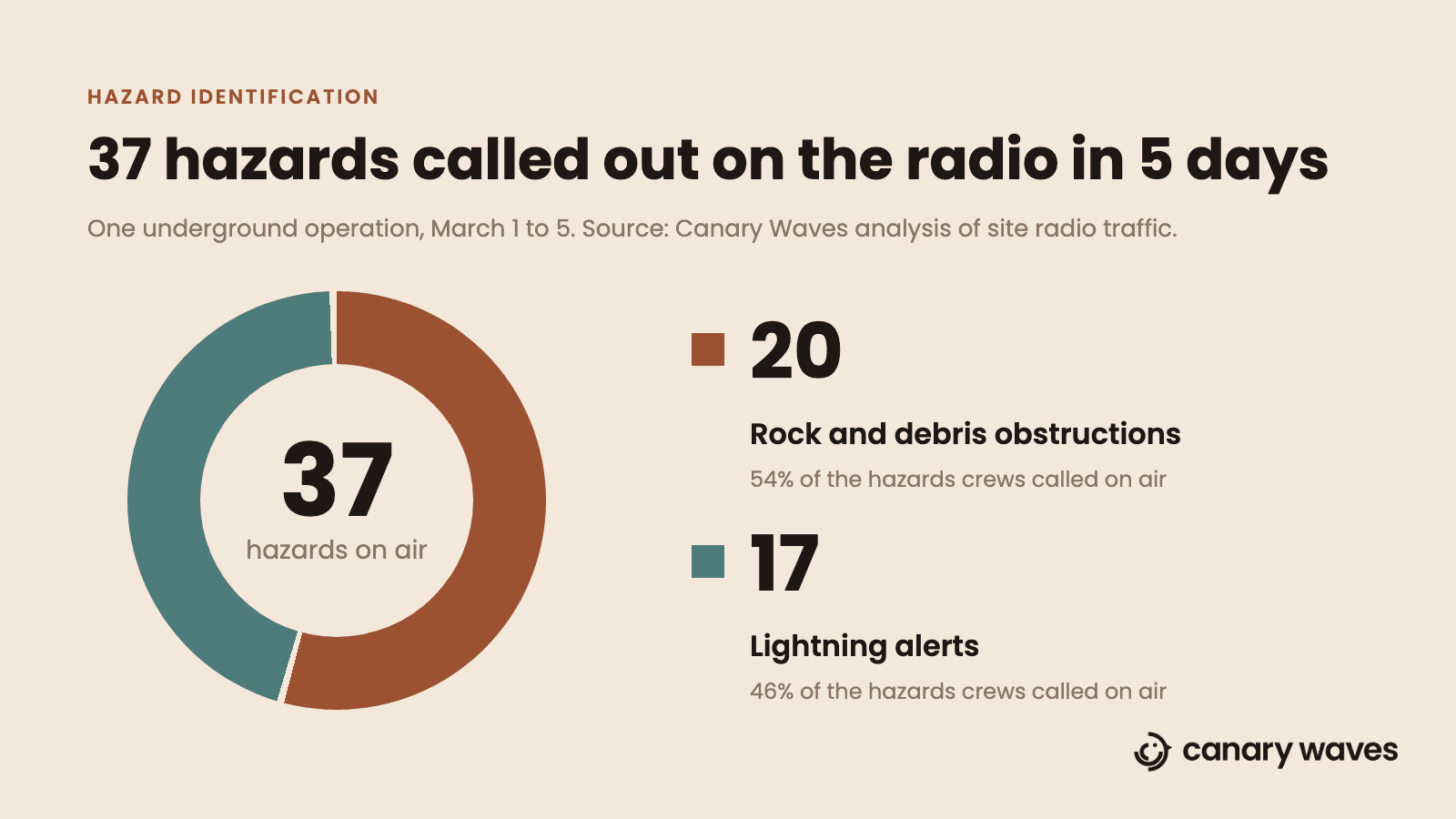
Of the 37 hazards crews flagged, seventeen were lightning alerts. Twenty were rock and debris obstructions on the roads the fleet was running.
None of that is a failure by the crews. It is the opposite. Operators saw something, said something, and said it to the people who could act. That is exactly the behavior every safety program asks for.
The question is the next step. How many of those 37 calls made it into a system where the follow-through could be tracked? Which rock got cleared, and when? Which lightning call led to a hold, and how long did it run? Or did some of them live and die as a passing comment on the radio?
A hazard mentioned on the radio and never logged doesn't go away. It just waits. Maybe for the next shift, who never heard the call. Maybe for the next storm, when nobody can remember what the site did last time.
Why hazard identification in mining needs a record, not just a report
Spotting a hazard is only half of the job. The other half is proving it was dealt with. US regulation already expects that, and the numbers show why it matters.
- The rule asks for a written trail. Under MSHA's workplace examination standard for surface metal and nonmetal mines, the examination record must describe each condition that may adversely affect safety or health, add the date of corrective action, and be kept for at least one year (30 CFR 56.18002). A rock called out mid-shift on the radio is exactly the kind of condition that record is meant to capture.
- Reported hazards are often serious ones. When NIOSH researchers studied one quarter of near-miss reports at an aggregates company, workers logged 249 near misses, 167 of them valid. Researchers rated 30% of those high risk and 26% critical (Haas, Demich and McGuire, NIOSH, 2020). More than half of what those crews flagged was rated high or critical.
- Rock and haulage still kill miners. US mining recorded 33 miner deaths in 2025 by trade-press count. Powered haulage led with 13. Falls of face, rib, side or highwall caused two more, and falling, rolling or sliding rock or material caused another two (Pit & Quarry, January 2026). A boulder on a haul road sits right where those two categories meet.
- Lightning is a regulated hazard, not just weather. In Queensland, the courts backed the regulator's position that heavy mobile equipment must not operate when lightning strikes are occurring within 16 km. The regulator pointed to tire explosions in air-filled tires and current traveling through conductive parts of vehicles (Australian Mining Review, November 2025).
Put those together and the gap is plain. Crews identify hazards in real time, out loud. Compliance and learning both depend on a record. In between sits a radio channel that nobody is writing down.
Signals to listen for when a hazard is building
Most hazard calls don't sound like alarms. They sound like routine traffic. These are the signals that carry a hazard on a mine channel:
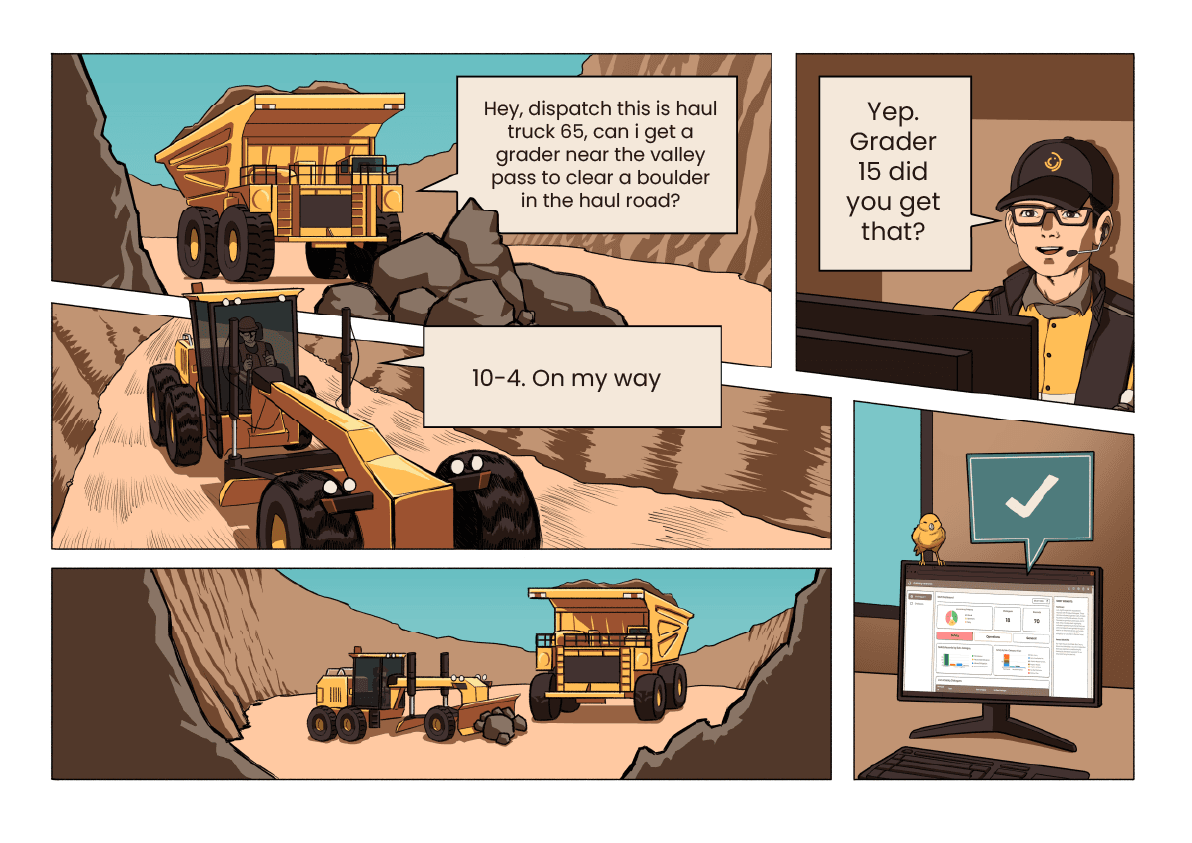
- Debris calls. A rock or spill reported on a road or at a dump point, often followed by a request for a grader or dozer.
- Lightning alerts. Reports of strikes getting closer or showing on the detector. The first sign that a hold is coming, and the start of the clock for it.
- Workaround instructions. Traffic being steered around something. It means a hazard is still there.
- A second mention of the same hazard. A crew asking whether anyone is clearing it. The first call didn't land.
- A hazard reported as still in place. A hazard that has outlived the shift that reported it.
The last two matter most. A repeated hazard is a follow-through problem, not an identification problem. The crew did their part twice.
What good sites do with hazard calls on the radio
You don't need new technology to close a lot of this gap. A few simple habits, done consistently, go a long way.
- Treat dispatch as the first logbook. Give dispatch a short, fast way to note every hazard called on air: time, location, type, who's responding. A shared sheet works. The point is that the call leaves a trace.
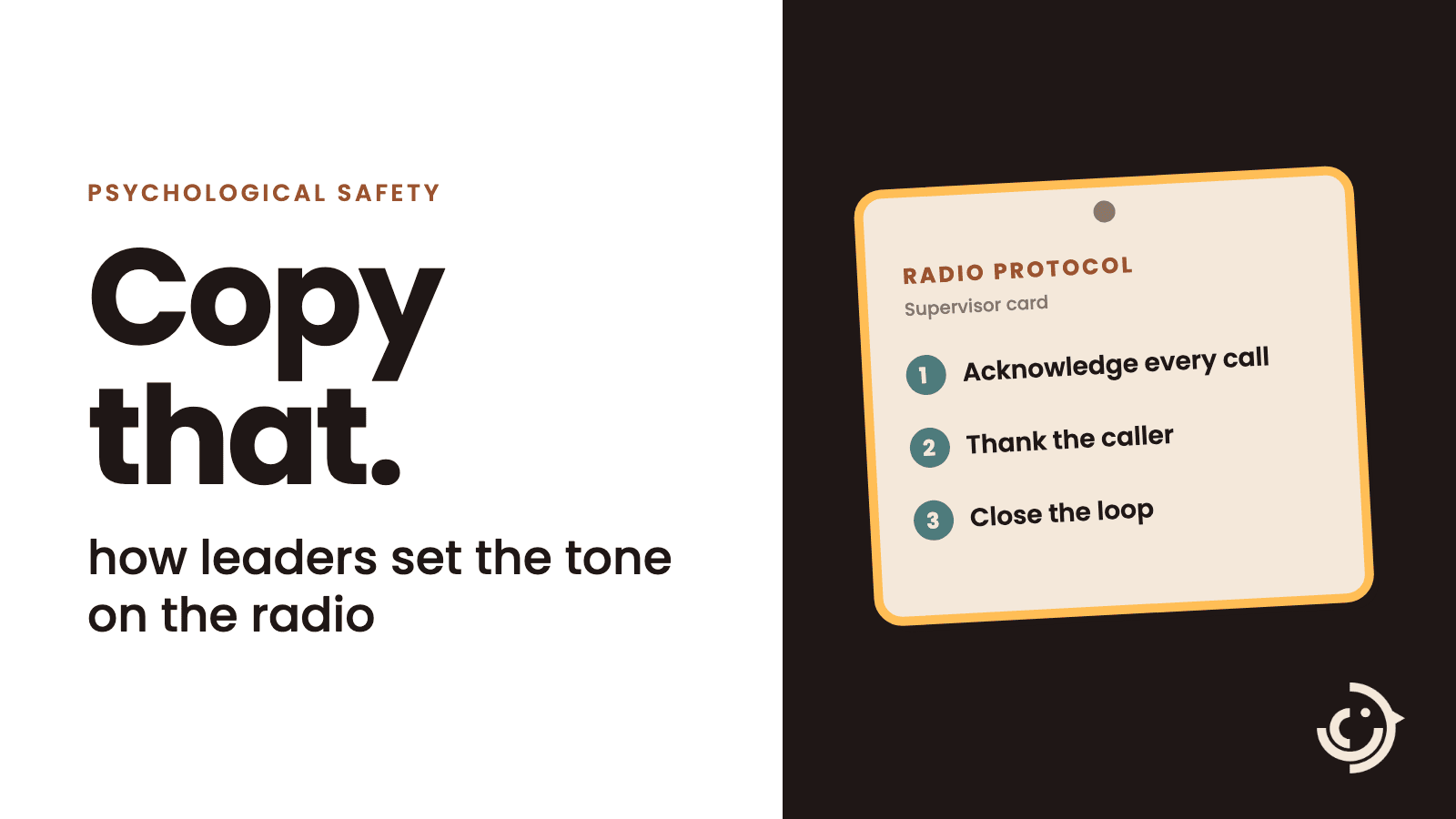
- Close the loop on air. Ask whoever clears the hazard to call it clear on the same channel. Now the crews know, and dispatch can close the line.
- Make lightning holds a logged event. Record when the hold started, what triggered it, when it lifted and which units parked where. Lightning holds also build queues, which feed the congestion patterns we wrote about in what 365 holding calls reveal about bottlenecks.
- Carry open hazards across the shift change. Make unresolved radio hazards a standing item in the handover. The incoming supervisor should hear about the rock that's still in the lane before their crews find it.
- Look for repeat locations weekly. If the same switchback throws debris every few shifts, that is a ground-control or road-design problem, not a radio problem. A permanent fix beats a daily grader call.
- Thank the caller. A visible response tells crews their call made a difference. For how pressure on the channel shows up in the language crews use, see why near-miss language spikes with congestion.
These steps rely on people with plenty else to do. On a busy channel at the end of a long shift, some calls will still slip. That's not a discipline problem. It's a volume problem.
Where Canary Waves fits
Canary Waves listens passively to the radio your site already runs. It picks up every hazard mention as it's called, tracks whether it was actioned on air, and builds an auditable record that holds up under compliance review. No new hardware, and nothing changes for operators, which is the only kind of tool that survives on the frontline, as we argued in why mine safety tools die on the frontline. See the signals we surface from a typical shift.
Preventable should mean prevented. That starts with not losing the warnings your crews already give.
See the signals we'd surface from a typical shift on your site. Book a 30-minute walkthrough.
FAQ
What is hazard identification in mining?
Hazard identification in mining is the process of finding conditions that could hurt people or damage equipment, such as loose rock, debris on haul roads, lightning, or failing ground. It happens through workplace examinations, pre-shift checks and risk assessments, and, on sites that run two-way radio, in real time over the radio during the shift.
Do hazards called out on the radio count as reported?
Usually not on their own. A radio call reaches the people who can act, but it leaves no record unless someone writes it down. MSHA's workplace examination rule expects adverse conditions and their correction dates to be recorded, so sites need a way to move radio hazard calls into a log that can be checked later.
What hazards are most often called out on mine radio?
On mine sites, common calls cover rock and debris on haul roads, spill at dump points, weather such as lightning and dust, poor road conditions, and equipment problems. In one operation's 5-day analysis, crews called out 37 safety hazards on air: 20 rock and debris obstructions and 17 lightning alerts.
How can a mine track whether radio hazard calls were actioned?
Start simple. Have dispatch log each hazard call with time, location and responder, ask crews to call hazards clear on the same channel, and carry open items into the shift handover. Review repeat locations weekly. Voice-to-data tools can automate the capture so nothing depends on someone having a free hand.
Why does logging lightning alerts matter?
Lightning holds stop the fleet, build queues and raise the risk of tire and electrical incidents. Logging when each alert and hold started and ended shows whether the site's lightning procedure was followed, how much production time storms cost, and where trucks were parked. That record also supports compliance reviews and incident investigations.